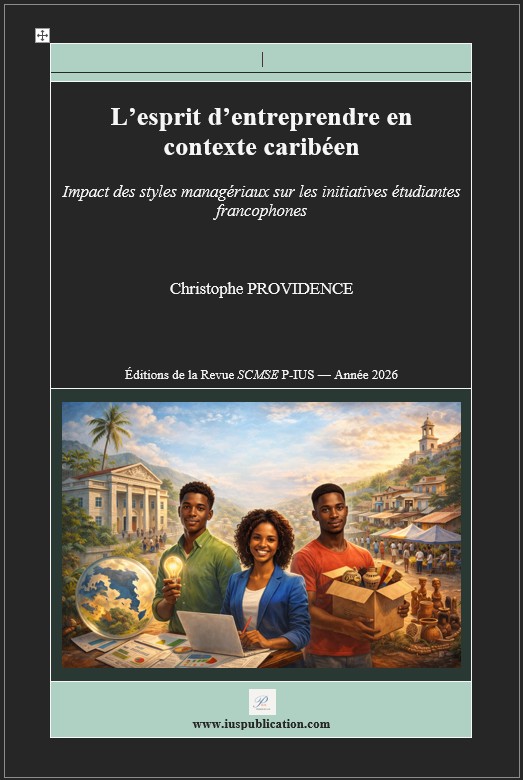
Cultural, identity-related and institutional challenges of management in a postcolonial context
DOI:
https://doi.org/10.66860/scmse.v.i.52Keywords:
Management, Postcolonial, Authority, Hybridization, AgencyAbstract
This chapter examines how management and authority styles within educational and support systems shape young people's entrepreneurial capacities. Drawing on a cultural and postcolonial perspective on leadership, it reveals the persistence of a hierarchical power structure, reinforced by administrative centralization and standardized procedures. The analysis highlights paternalistic or top-down forms of authority which, under the guise of efficiency, can produce conformity, self-censorship, and an implicit selection of "legitimate" profiles. Conversely, the chapter identifies dynamics of hybridization, improvisation, and resistance through action, where young people reconfigure imported norms. Three intersecting trajectories illustrate the tensions between institutional control, the quest for autonomy, and the emergence of more horizontal relational styles.
References