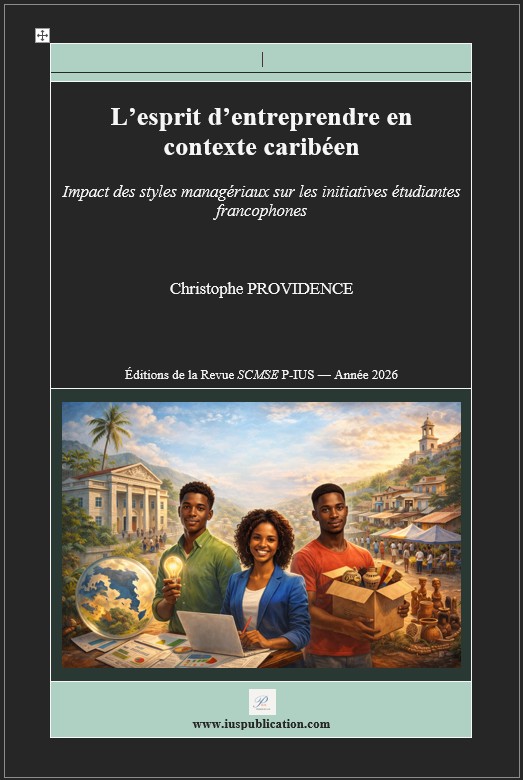
Haiti: Between resilience, resourcefulness, and the quest for autonomy
DOI:
https://doi.org/10.66860/scmse.v.i.54Keywords:
Haiti, Support, Management Styles, Resilience, ResourcefulnessAbstract
This chapter analyzes entrepreneurial training and support practices in Haiti, within a context of institutional fragility and a plurality of actors with divergent rationales. It highlights the dominance of imported models (formats, tools, validation criteria) and the insufficient coordination between public institutions, universities, community initiatives, and funding mechanisms. The study underscores the impact of managerial styles on access to recognition and resources: top-down management, pressure to conform, and relational distance can hinder initiative, while more collaborative, dialogical, and context-specific approaches foster relational empowerment. The chapter also describes strategies of circumvention and silent appropriation, as well as the emergence of alternative, locally rooted mechanisms. Three stances toward the institution—conforming, circumventing, and creating differently—structure student trajectories.
References